Brown spots
Some superficial sun-related pigmentation can be a suitable target. A new, changing or unusual spot needs medical assessment before cosmetic treatment.
 Perth
Venus Versa · Manning, Perth
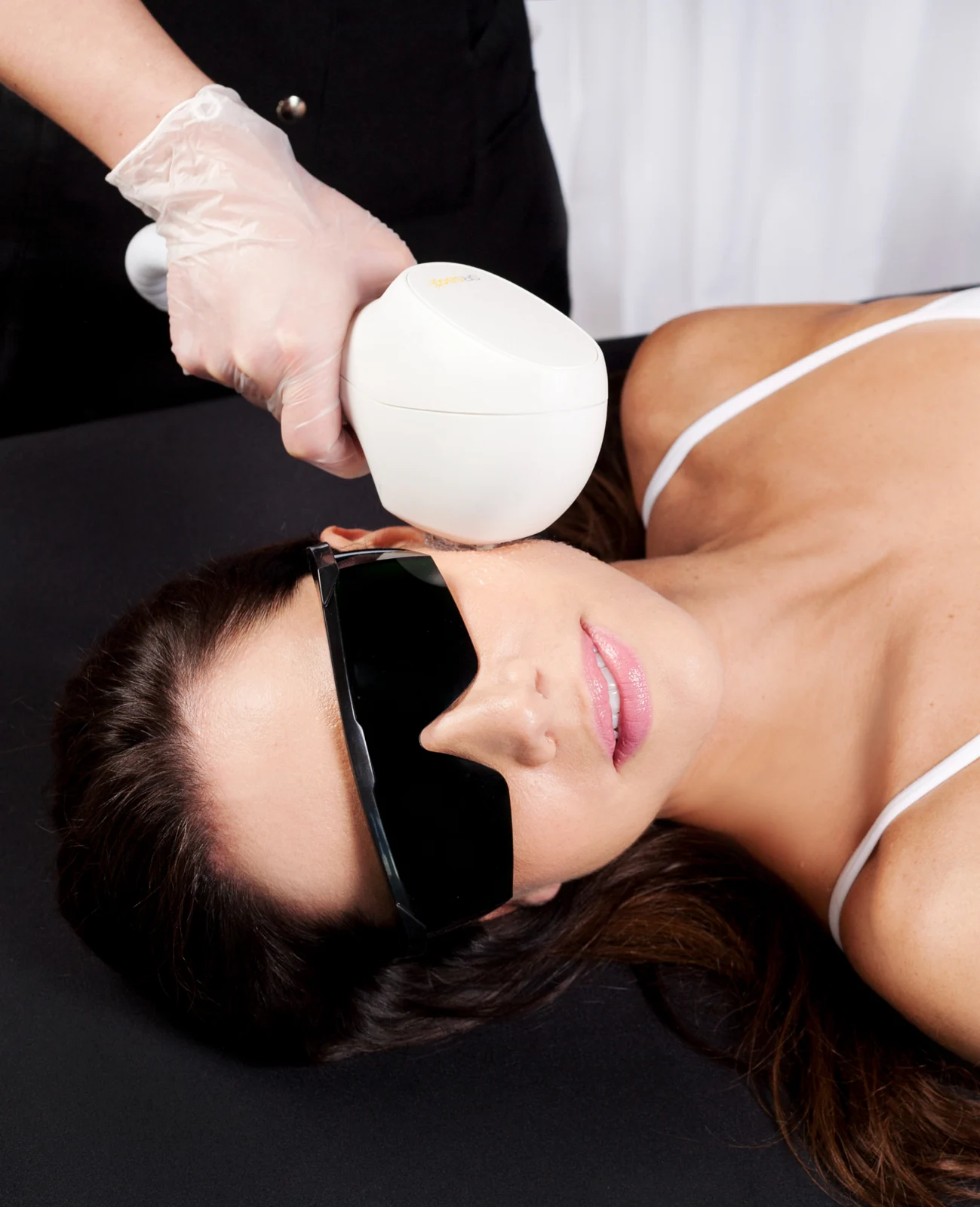
Pulses of light target selected pigment and superficial blood vessels to improve suitable dark spots and uneven-looking tone. Redness and pigmented marks need assessment before deciding whether IPL is appropriate.
The principle
IPL stands for intense pulsed light. Unlike a laser’s single wavelength, it uses a broad range of light filtered for the treatment goal. Selected light is absorbed by melanin in pigment or haemoglobin in vessels and converted to heat.
That selectivity is also why your natural skin colour, a recent tan and the type of mark matter. Treating the wrong target or using inappropriate settings can injure skin.
Some superficial sun-related pigmentation can be a suitable target. A new, changing or unusual spot needs medical assessment before cosmetic treatment.
Suitable superficial vessels and some persistent redness may be considered. Irritation, eczema-like symptoms and rosacea are not interchangeable diagnoses.
Before the first pulse
New IPL clients need a complimentary consultation and patch test before their first treatment.
Start with a consultationIPL generally suits light-to-medium skin tones better. Darker or recently tanned skin can carry a higher risk of burns or colour changes; another approach may be advised. Avoid tanning and self-tan.
Tell us about light sensitivity, medicines, pregnancy or breastfeeding, active rashes, cold sores, healing problems and recent treatments. Do not stop prescribed medicines without your prescriber’s advice.
New or changing pigmented spots need medical assessment first. A patch test helps assess the response but cannot eliminate every risk.
In the treatment room
This is a general treatment guide. Your exact steps and suitability are confirmed before treatment.
A typical IPL appointment includes clean skin and protective eyewear. The area, filter and settings are selected for the concern and skin response.
The applicator delivers brief pulses to the chosen area. These can feel like a snap or flick; report unexpected pain immediately.
Skin response is checked and aftercare explained. Sun protection and avoiding further tanning are important throughout a treatment plan.
After the light
Treated pigment can temporarily look darker before settling.
Temporary pinkness, soreness or warmth can occur. Protect the area from sun and follow the advised skincare routine.
A sunburn-like response may still be visible. Do not treat ongoing sensitivity as a signal to resume irritating products.
Redness, swelling or peeling can take several days to settle. Seek advice for blistering or worsening symptoms rather than waiting for the timeline to end.
A general planning guide, not a fixed healing schedule. Your treatment settings and skin response may change the timing. Follow the aftercare given for your appointment.
The goal is a more even-looking tone, not a permanently pigment-free complexion. Sun exposure and the cause of pigment or redness affect how long improvement lasts.
Burns, blistering and unwanted darker or lighter marks are potential complications.
Before you decide
Suitability, sensations and planning your appointments.
IPL uses a range of light wavelengths rather than a laser’s single wavelength. Filters help select the light used for particular concerns. Targets such as melanin and haemoglobin absorb the energy, which is converted into heat.
IPL may improve the appearance of sun-related pigmentation, freckles and some forms of visible redness or small vessels. Assessment is important: not every pigment or redness concern is suitable for IPL.
A course is often needed. A typical plan may involve four to six sessions, three to six weeks apart, but your concern, skin response and recovery determine the plan.
You may feel brief warmth or a snapping sensation with each pulse. Protective eyewear is required. Tell your practitioner if the sensation becomes uncomfortable.
Some people have little interruption to normal activities, but redness or swelling can occur. Treated pigment may temporarily darken before flaking away. Recovery varies with the treatment and your skin.
Possible effects include tenderness, redness, swelling and peeling. Blistering and changes in pigmentation can also occur. Screening, appropriate settings and aftercare reduce risk but cannot eliminate it.
A patch test helps assess your skin’s response before a larger area is treated. General safety guidance allows up to 48 hours to observe a reaction; confirm your required assessment and interval with us. Testing does not guarantee a reaction-free treatment.
Tell us about medications and supplements, recent sun exposure or tanning products, photosensitivity and light-triggered seizures. Melasma needs particular care because IPL can worsen pigmentation in some cases. Suitability and timing are assessed before treatment.
No. It generally works best on light to medium skin tones. Darker or recently tanned skin has a higher risk of unwanted pigment changes or burns; an alternative may be more appropriate.
No. Redness may come from irritation, rosacea or visible vessels. Dark patches may be sun damage, melasma or post-inflammatory pigment. The cause must be assessed before selecting light treatment.
No. This menu is for photorejuvenation. A device having a separate acne applicator does not mean that acne treatment is included in this service.
Yes. A tan adds pigment that can absorb treatment energy. Tell us about sun exposure and self-tan before attending; treatment may need to be postponed.
Do not pick or apply strong active products. Contact the clinic promptly and seek medical advice for significant pain, blistering, spreading redness or signs of infection.
Your next step
We check your skin, health history and treatment suitability before proceeding. Results vary.
Discuss or book IPL